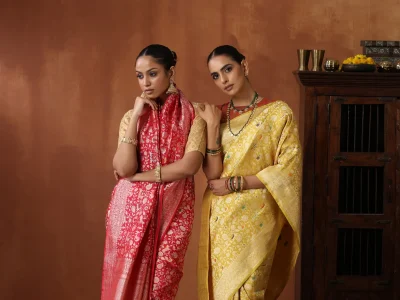
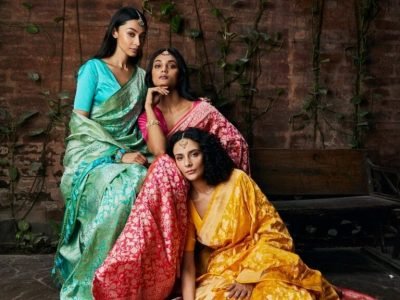
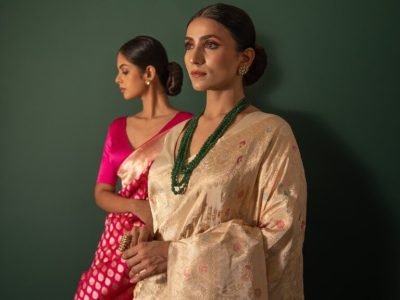
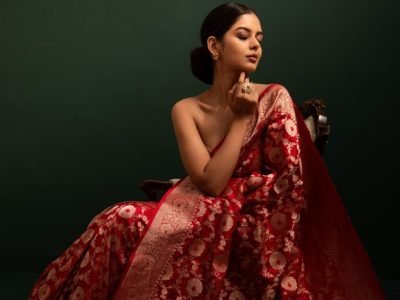
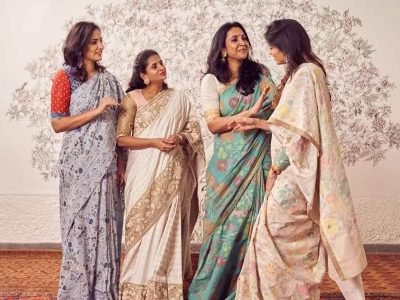
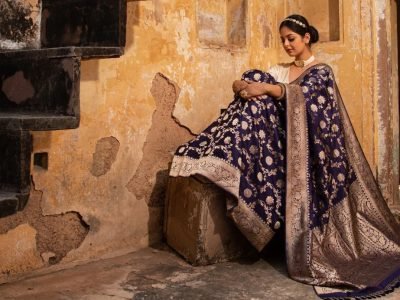
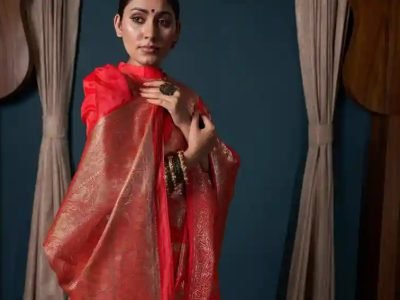
For the longest time, the saree was seen as something you reached for only on special days. It sat in almirahs behind glass doors, wrapped in muslin, waiting patiently for a wedding, a family gathering, or an annual celebration. It was associated with grandeur, tradition, and sometimes even discomfort. But a quiet revolution is reshaping that narrative—one where the saree is stepping out of the shadows of occasion and walking freely into everyday life. The saree is no longer just a memory or a museum piece. It’s a mood, a choice, a way of being. And it’s being styled, loved, and lived in like never before.
What makes this shift so meaningful is the way it reclaims comfort. For generations, comfort in clothing was synonymous with pants, leggings, kurtas, or denim. But now, women are discovering that comfort can also live in six yards of unstitched fabric. A soft mul cotton saree on a hot summer day can feel more breathable than anything synthetic. A loosely draped linen or khadi saree with a simple blouse can make a Monday meeting feel a little less rigid. In cities and small towns alike, more and more women are wearing sarees to work, to college, to brunches, to grocery stores—not because they have to, but because they want to. It’s no longer a symbol of tradition. It’s a statement of ease and identity.
The beauty of casual saree styling lies in its playfulness. It’s no longer about matching sets or rigid rules. Today, a saree can be paired with a tank top, a graphic tee, or a denim jacket. You can drape it over your shoulder like a stole, or tuck it in high-waisted and loose, like a skirt. Belts, sneakers, silver jewelry, even combat boots—nothing is off-limits. The saree has become a canvas for creativity. A young artist wears it with paint stains and canvas shoes. A teacher layers it over a turtleneck. A writer wears it barefoot with a mug of chai in hand. In each case, the saree doesn’t dictate style—it absorbs it.
What makes everyday saree dressing feel fresh is that it doesn’t chase perfection. The pleats don’t have to be razor sharp. The blouse doesn’t need to be stiff. The drape can be messy, experimental, spontaneous. That’s where the charm lies—in the lived-in look, the imperfect pallu, the folds that shift with your stride. It becomes not just an outfit, but an extension of your day, your mood, your rhythm. And unlike stitched garments, the saree adapts. It doesn’t care if you’ve gained weight, lost some, skipped the iron, or ran out of matching bangles. It’s ready to flow with you, however you are.
There’s also something powerful about how casual saree wear is building new stories. Women are wearing their mothers’ old handlooms with sports bras. They’re mixing vintage with streetwear. They’re showing up to work presentations and poetry readings draped in weaves that carry both memory and edge. What was once a generational gap is becoming a bridge. And through this, there’s an unspoken tribute being paid—to the past, to the women before us, and to the idea that style and tradition don’t need to be in conflict.
Social media has added fuel to this everyday saree movement. Videos of women draping in two minutes before leaving for errands, reels with unboxing of soft, sustainable fabrics, and behind-the-scenes glimpses of living room mirror selfies have made the saree less intimidating, more inviting. There’s a growing comfort in knowing that you don’t need a stylist or a reason to wear it. You just need the desire to feel good in your skin, your body, your fabric.
In a way, bringing the saree into the everyday is not just about fashion. It’s about slowing down, about intention. It’s about refusing to let beauty and elegance be locked away for only the ‘right’ moment. It’s about seeing the sacred in the mundane—eating breakfast in a saree, cycling through the neighborhood, curling up on the couch with a book. It’s a reminder that tradition is not something to visit once a year. It’s something you can carry, breathe, and live in. Every day.
The almirah is no longer the final resting place for sarees. It is now just a stop on the way out—where you reach in, pull one out with a smile, and let it move with you into the morning light.