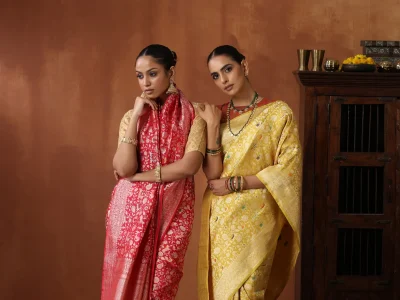
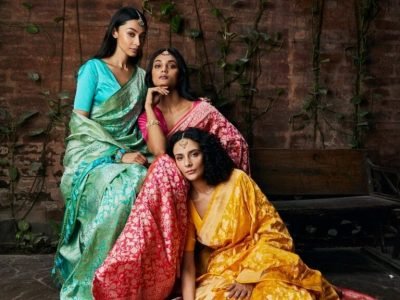
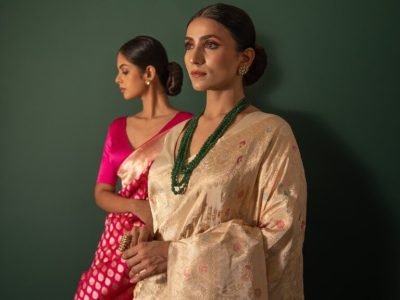
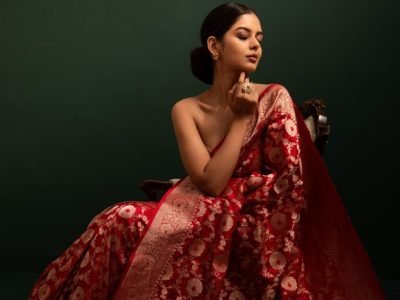
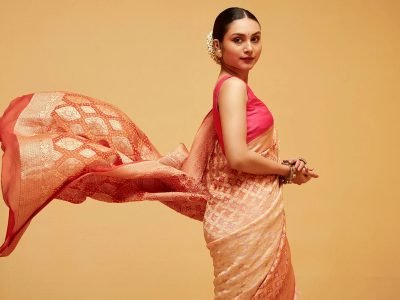
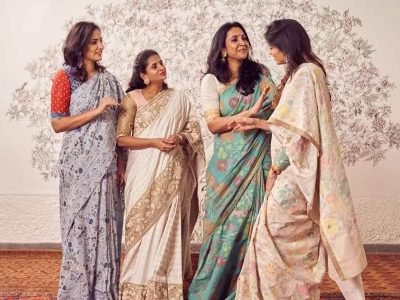
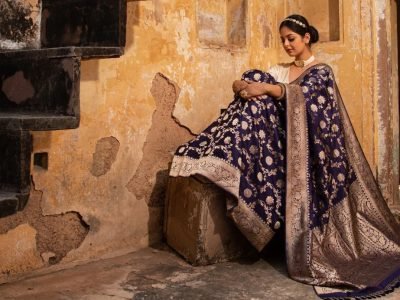
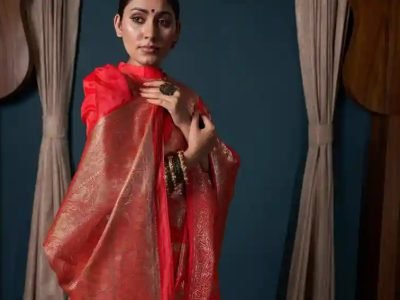
A saree is never just a saree. It is a language. A subtle expression that wraps around the body but speaks directly to the soul. When someone chooses to drape a saree, it isn’t merely about color or fabric. It’s a mood, a memory, a mirror to the inner self. In every pleat, there is intention. In every pallu, a trace of personality. The saree becomes more than attire—it becomes an extension of identity, a way to say something without uttering a word.
The freedom the saree offers is unmatched. It has no fixed shape, no hard seams, no permanent form. It molds to the body and the moment. A woman who chooses a soft handloom cotton in neutral tones might not just be chasing comfort, but grounding herself in clarity and ease. Someone who picks a bold silk with temple borders and gold zari could be channeling strength and legacy in equal measure. A printed mul cotton with quirky parrots or script patterns might point to a playful spirit, an artist’s heart, someone who refuses to take themselves too seriously. Each drape becomes a subtle statement. It’s not about being noticed; it’s about being felt.
The way you drape it says even more. Some let the pallu fall freely, like a carefree thought—unbothered by symmetry, unburdened by tradition. Others pin every fold in place, structured and deliberate, like someone who finds power in precision. There are those who wrap it tight around the waist with a long pallu flung back, almost like armor, commanding space. And those who wear it high and loose, floating around them as they move, like an artist mid-thought. There is no right way—only your way.
In moments of transition, the saree often becomes a silent companion. First job interviews, college farewells, meeting a partner’s family, dancing at a best friend’s wedding—each occasion brings a saree into the frame, chosen with care, worn with anticipation. The saree becomes a timeline of memories. The maroon silk your mother gave you when you turned eighteen, still smelling faintly of her perfume. The indigo cotton you wore on your first solo trip, barefoot, sun-warmed, unfiltered. The handloom from a local weaver that you wore to a protest or an open mic night, stitched not with thread but belief. These choices aren’t random. They are layered, reflective, full of meaning.
Even the blouses we choose add to this quiet conversation. A sleeveless blouse with chunky earrings might signal rebellion and confidence. A high-neck, full-sleeved look could speak of elegance and nostalgia. A borrowed men’s shirt or an old band tee worn underneath a saree may say, “I make the rules.” The combination becomes a collage of time and taste—a mix of past and present, of tradition and defiance.
In public spaces, the saree also becomes a shield. It gives many women the confidence to walk through a crowd with their head held higher. The very thing that was once seen as fragile or feminine becomes a source of power. There’s a quiet but undeniable strength in choosing something so rooted in the past and carrying it into modern chaos with grace. Even in the workplace, what used to be reserved for formal Fridays or ethnic days is now being reclaimed as professional, sleek, and assertive.
There are days when the saree is a balm—soft fabric easing the weight of the world, reminding you to breathe, to center yourself. There are other days when it is defiance, drama, celebration. When you want the world to notice. And sometimes, it’s simply a ritual. Something familiar in an unfamiliar week. Something beautiful when you don’t feel it inside. Something strong when you feel delicate. It becomes your voice when words fail.
So yes, a saree drape says something. Sometimes it shouts with color and print. Sometimes it whispers in understated folds. It may say, “This is who I am,” or “This is who I’m becoming.” It may say, “I’m holding on,” or “I’m letting go.” It might be joy, rebellion, reverence, nostalgia, or just a desire to feel beautiful without explanation.
Whatever it says, it’s always true. Because the saree doesn’t lie. It reflects who you are—exactly as you are—in that moment.