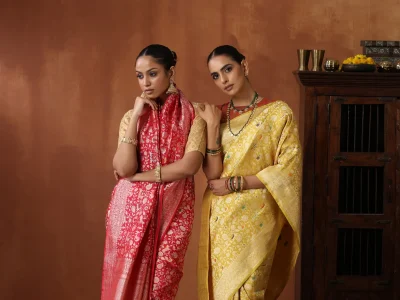
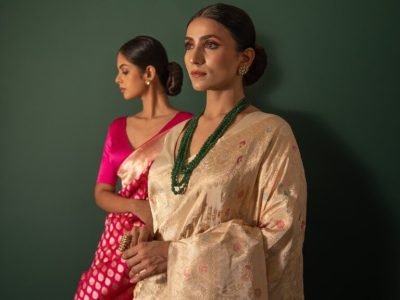
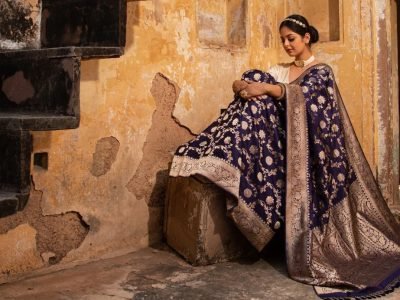
Behind every handwoven saree lies a quiet journey—of patience, precision, and passion. What begins as a humble thread is transformed, through time and skill, into a piece of wearable art. When we hold a handloom saree, we’re not just admiring fabric; we’re touching a story—of tradition, of the weaver’s rhythm, of heritage flowing gently from loom to drape.
The journey starts long before the first thread is placed on the loom. It begins with the choice of fiber—cotton picked under the sun, silk reeled from cocoons, or linen drawn from flax. These raw materials are cleaned, softened, and dyed, often using techniques that have been practiced for generations. The colors are not merely chosen for their beauty; they carry meanings, drawn from rituals, festivals, and the land itself. Indigo, turmeric yellow, brick red—these hues tell stories as old as the soil they come from.
Once dyed, the yarns are stretched across large wooden frames, prepared meticulously for the loom. This stage, called warping, is where the backbone of the saree is formed. It is a process of balance and mathematics, where the length and arrangement of threads must be exact. A single mistake here can mean hours of rework later, so it’s approached with care and focus. Often, families gather to help at this stage, with generations working side by side—elders guiding hands that are still learning.
Then comes the heart of the creation: weaving. The loom, often a simple wooden structure set in the weaver’s home or village courtyard, becomes a space of magic. The weaver sits down with muscle memory that has been passed through bloodlines. With every beat of the shuttle, with every shift of the pedal, a pattern starts to emerge. Whether it’s the intricate motifs of a Banarasi, the geometric forms of an Ikat, or the fine transparency of a Jamdani—each style is a dialect in the language of the loom.
Weaving is not just physical work; it’s emotional labor. It requires long hours, immense concentration, and a deeply intimate relationship with the fabric. The saree grows slowly—inch by inch, over days, sometimes weeks. Some sarees, especially those with brocade or complex designs, may take months to complete. And yet, rarely is the weaver’s name known. The pride lies in the perfection, not in the praise.
What emerges from the loom is a saree that breathes—soft to the touch, often with slight imperfections that make it human. It carries warmth, quite literally, from the hands that wove it. It holds within its threads the seasons of the weaver’s life: the monsoon’s delay, a child’s laughter in the background, a festival celebrated midway through the work. These sarees are more than products; they are personal histories.
Once woven, the saree might be sent for finishing. This could include washing, starching, ironing, or attaching borders and tassels. Sometimes it’s packed and shipped straight to stores or homes. Sometimes it waits, folded neatly on a wooden shelf in a small-town cooperative. Either way, it now stands ready—waiting to be worn, admired, and lived in.
When a woman drapes such a saree, she wears much more than fabric. She carries on her shoulder the legacy of craft, the softness of handmade art, and the quiet pride of communities that continue to create against all odds. In a world ruled by machines, the handwoven saree whispers stories of slowness, mindfulness, and soulful beauty.
Its journey is not just from loom to drape. It’s from heart to heart. From heritage to home.