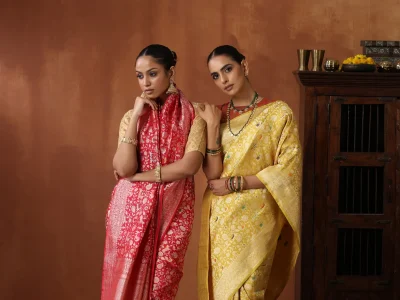
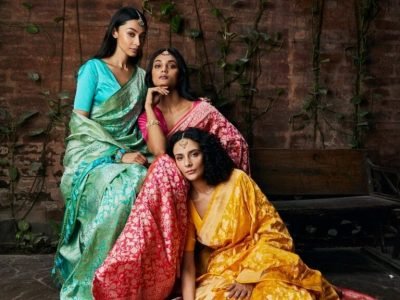
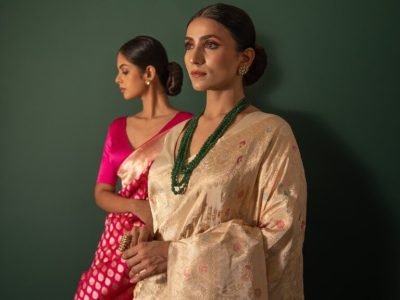
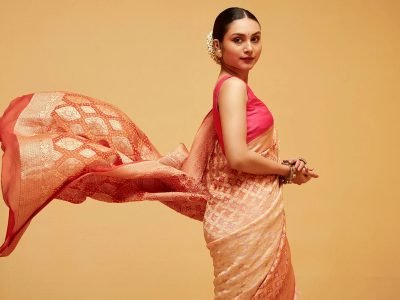
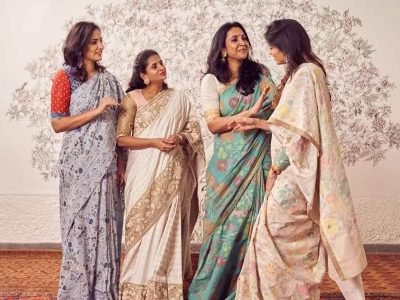
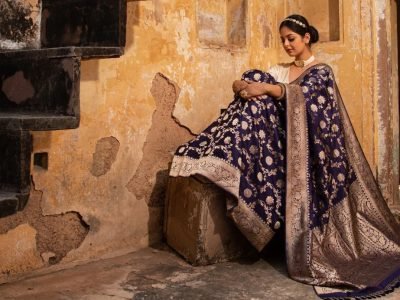
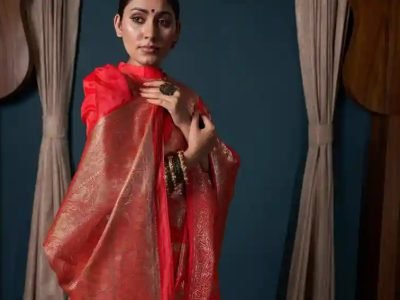
There was a time when the saree sat quietly in the back of a wardrobe, folded lovingly, reserved for festivals, weddings, or perhaps passed down as a keepsake. It was seen as something one grew into, often symbolizing a transition—into adulthood, into tradition, into responsibility. For a while, it felt like the younger generation, caught in the whirl of denim, fast fashion, and convenience, had moved away from it. But now, almost like a gentle rebellion against fleeting trends, the saree is finding its way back—not as an obligation, but as a choice. And that changes everything.
This revival is not loud, not mandated by norms. It is soft, individual, and deeply personal. Young women are rediscovering the saree on their own terms, not because they have to, but because they want to. For some, it starts with curiosity—maybe it’s a wedding invite, a college farewell, or simply the discovery of a forgotten saree in their mother’s almirah. They try it on, fumble with the pleats, adjust the pallu, and suddenly, there’s a quiet shift. It doesn’t feel like costume or tradition. It feels powerful. Authentic. Beautiful.
The appeal lies in how the saree adapts. It doesn’t ask you to be someone else. You can pair it with sneakers, drape it over a crop top, belt it at the waist, or go full vintage with flowers in your hair and heirloom jewelry. The saree allows experimentation while holding space for who you are. It doesn’t judge your choices; it embraces them. This freedom has made the saree less about age or event and more about expression. On Instagram reels and in campus corridors, in art cafés and indie concerts, sarees are being worn with confidence, irony, love, and intent.
There’s also something deeply grounding about choosing to wear a saree in a world that moves too fast. Amid the chaos of algorithms, updates, and endless scrolling, the act of draping a saree forces pause. It makes you feel your body, the fabric, the ritual. It connects you not only to tradition but to a slower, more tactile way of being. That moment of tucking the pleats or adjusting the shoulder isn’t just style—it’s memory. It’s your grandmother’s voice echoing in your mind. It’s the warmth of your mother’s smile. It’s the soft empowerment of reclaiming something that always belonged to you.
The younger generation isn’t just embracing the saree—they’re redefining it. They’re reviving forgotten weaves, spotlighting artisans, and making ethical, handmade pieces a part of their identity. It’s not just about aesthetics; it’s about values. A Gen Z buyer today wants to know where the fabric came from, who wove it, and what story it carries. In choosing a Jamdani over fast fashion, they’re making a political choice, a cultural statement, and a fashion move all at once. Social media has become a powerful platform for this resurgence, where hashtags like #SareeNotSorry or #100SareePact aren’t just trends—they’re movements. Communities are forming, where wearing a saree is an act of solidarity, pride, and joy.
There’s also beauty in how this revival crosses gender and body boundaries. Sarees are being worn by people of all shapes, sizes, and identities. The notion that a saree belongs to a certain kind of body or gender is dissolving fast. Designers and drapers are proving that it is not the body that fits the saree—it is the saree that celebrates the body. And so, more people than ever before are finding a voice in the folds of this six-yard wonder.
What was once a garment associated with rules and rituals is now an open canvas. It can be minimal or maximalist, worn to a protest or a party, paired with heirloom jewels or thrift-store finds. The younger generation doesn’t see the saree as a relic. They see it as a possibility. They are taking what was handed down and turning it into something of their own—not by erasing its past but by adding to its future.
And perhaps, in doing so, they are not just reviving the saree. They are reviving connection. To their roots, to their identity, to the people who came before them. And as the saree flows again on new shoulders, in new streets, on new mornings—it reminds us all that elegance, like culture, never truly fades. It simply waits to be rediscovered.