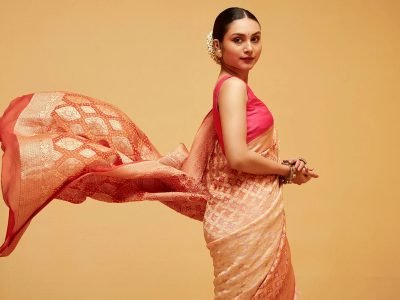
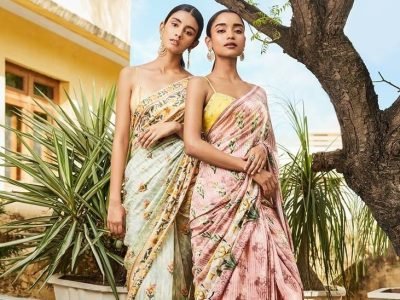
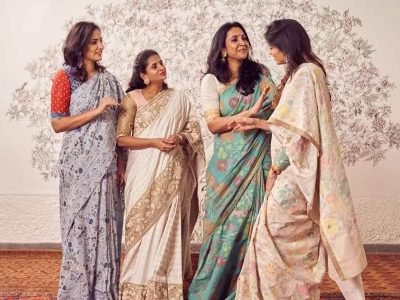
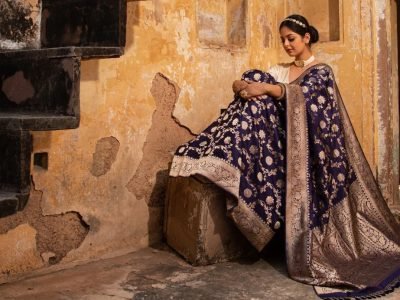
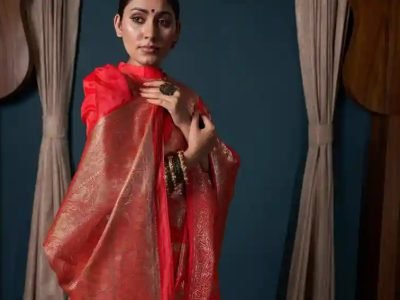
There’s a kind of poetry in how the saree responds to the seasons. It’s not just a garment—it’s a rhythm, a texture that shifts with the weather, a companion that adapts with grace. The saree does not resist change; it embraces it. And as each season turns its page, it brings a new opportunity to experience the saree differently—to feel it differently against the skin, to drape it with new intention, to let it become a part of the landscape you’re walking through.
In the slow, smoldering months of summer, the saree becomes a breeze. Light cottons, mulmul, handspun khadi, and soft linens move like air, barely there, but somehow still grounding. On days when the sun feels too close, a pale-hued saree in pastel lemon or cool grey becomes more than just comfort—it becomes calm. The drape is loose, the pleats relaxed, the blouse might be a sleeveless crop or just a simple knot in the back. Walking through heat in a breathable cotton saree feels like a secret only some know—the secret that elegance can also be easy, that tradition doesn’t need to weigh you down.
Then comes the rain—unexpected, romantic, messy. And the saree responds like a song. Prints bloom louder, fabrics get sturdier. Blends that dry fast and hold their shape—like cotton silks or soft synthetics—step in without stealing away the beauty. Monsoon isn’t about perfect drapes or flawless falls. It’s about walking through puddles, sometimes barefoot, letting the pallu flutter against damp wind. Deep indigos, earthy greens, and madder reds blend with the monsoon sky like memories. It’s a season where the saree becomes less about how it looks and more about how it moves with you—how it makes the rain feel like an experience instead of an inconvenience.
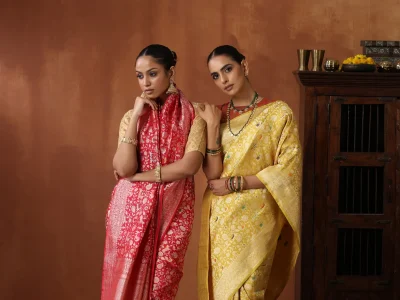
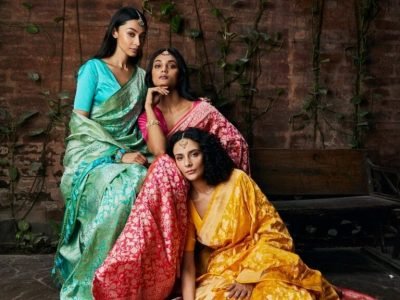
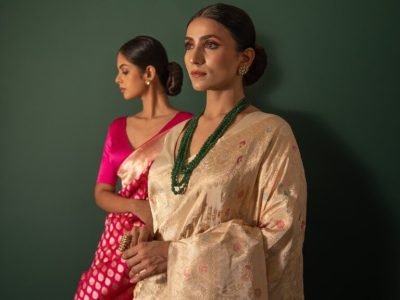
Autumn arrives like a whisper—clear skies, cooler nights, the smell of change. And with it, the saree starts to hold a little more texture, a little more drama. Silks begin to emerge again, as do rich weaves and intricate motifs. This is the time for deeper tones, for mustard, rust, and maroon, for drapes that feel like storytelling. You might choose a tussar that catches light differently or a chanderi that glimmers in the golden sun. The saree becomes both warmth and ornament, and with every wrap around the body, there’s a sense of preparation—for celebration, for quiet joy, for evenings that stretch a little longer.
Winter is where the saree truly surprises. It is here that it refuses to be boxed into summer nostalgia. Layered with woolen blouses, shawls, boots, and jackets, the saree takes on a fierce, unapologetic form. It is style with strategy. A pashmina over a raw silk saree becomes not just cozy but cinematic. Draped over sweaters or paired with long coats, the saree defies expectations. It doesn’t just survive the cold—it owns it. The way it merges with warm textures, how it holds the body close without losing its fluid grace, is nothing short of magic.
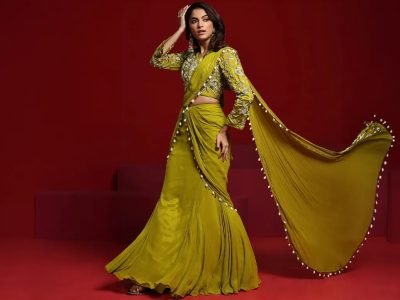
And as spring tiptoes back in, the saree transforms again. Lighter prints return, florals unfurl, chiffon and organza begin to sway like new leaves. There’s a lightness in the way it hugs the body, a smile stitched into the pleats. It becomes celebration again—not of an occasion, but of change itself. The saree in spring feels like new beginnings, like a deep breath, like color returning to the world.
What’s most beautiful about the saree across seasons is that it doesn’t just reflect the outside world—it reflects how we feel within it. It lets us respond to temperature and time with emotion, not just function. There is no need to give up style for comfort, or tradition for practicality. The saree allows both, always. With each shift in weather, it offers a new experience, a new reason to drape, a new rhythm to walk in.
Seasonal dressing isn’t a trend—it’s a form of self-care. It’s knowing what your body needs and choosing fabric, flow, and color that meet you there. In that way, the saree is not just timeless. It is endlessly timely.