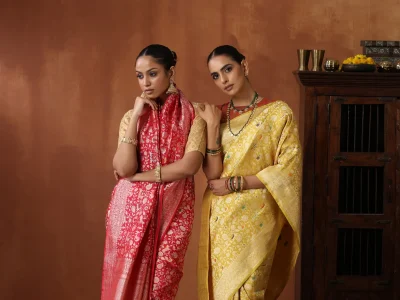
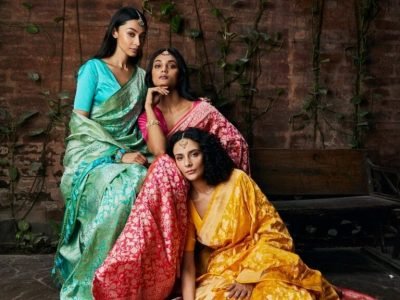
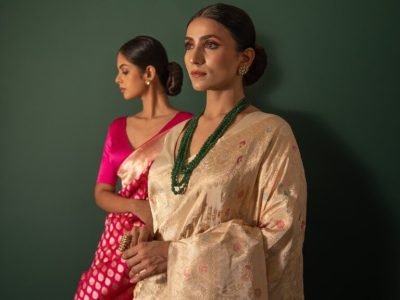
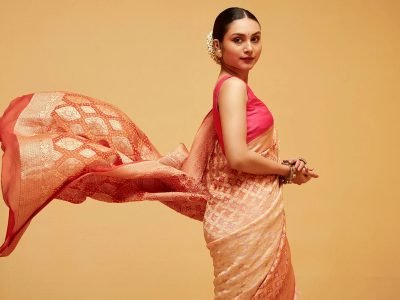
In a world of fast fashion and ever-changing trends, some garments never lose their magic. The saree, with its six to nine yards of flowing fabric, is one such timeless treasure. Worn across generations and reimagined by designers worldwide, the saree is not just clothing—it’s a legacy, a statement, and for many, a deeply personal expression of culture and identity.
A Living Symbol of Tradition
The saree has been a part of the Indian subcontinent’s cultural fabric for thousands of years. Ancient sculptures, paintings, and texts depict women draped in what we now recognize as early versions of the saree. Unlike stitched garments, the saree has no seams or buttons—just an unstitched length of cloth that adapts itself to the wearer. It has survived empires, colonization, modernization, and globalization, all while retaining its intrinsic charm.
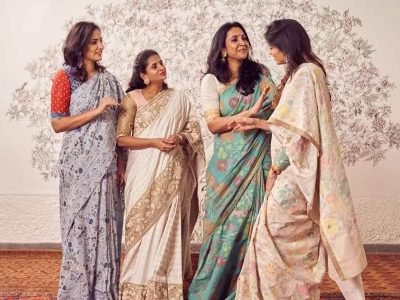
Each region in India has contributed its unique flavor to the saree. From the vibrant Bandhani of Gujarat to the regal Kanjivarams of Tamil Nadu, from the earthy Tant cottons of Bengal to the elegant Chikankari sarees of Lucknow, the saree is not one tradition—it is many, woven together by artistry, heritage, and love.
More Than Just Fashion
For many Indian women, a saree is more than an outfit. It’s a memory, a family heirloom, a wedding ritual, or a festival staple. A daughter might wear her mother’s wedding saree for her own special day. A grandmother’s handwoven saree, kept carefully folded in a trunk, might carry the scent of sandalwood and nostalgia. In this way, sarees become storytellers, passing down histories from one generation to the next.
Even in modern fashion circles, the saree has carved its niche. Designers have redefined it on international runways, Bollywood actresses have flaunted it on red carpets, and influencers have styled it for street fashion. And yet, despite all the experimentation, the saree’s soul remains unchanged—graceful, powerful, and deeply rooted.
A Canvas of Craftsmanship
What makes the saree especially timeless is the craft that goes into making it. It’s not just about fabric and color; it’s about tradition and human touch. Handwoven sarees, in particular, are masterpieces created by artisans who often follow centuries-old weaving techniques passed down through generations.
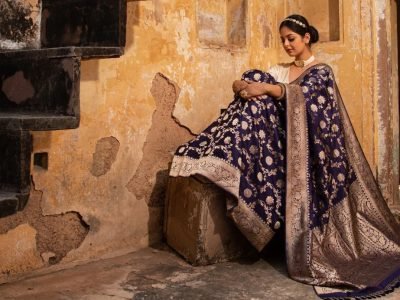
Each weave tells a story. The intricate Banarasi motifs, the geometric patterns of Ikat, the rich textures of Paithani, the nature-inspired designs of Kasavu—these aren’t just designs. They are the fingerprints of a region’s culture, climate, and community.
By wearing handloom sarees, we are supporting these artisans, preserving ancient skills, and sustaining an ecosystem that thrives on patience, skill, and slow fashion.
Versatile, Elegant, Empowering
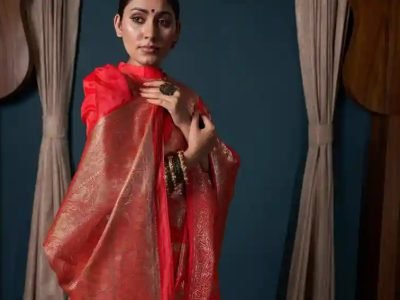
Contrary to the belief that sarees are only for traditional or formal occasions, they are incredibly versatile. Sarees can be dressed up or down, depending on how you wear and style them. A crisp cotton saree paired with silver jewelry can be perfect for a workday or a casual brunch. A satin saree with a sleek blouse and heels becomes a glamorous evening look.
Modern silhouettes, ready-to-wear pleats, pre-stitched sarees, and experimental drapes have made the saree even more accessible to younger generations and those new to wearing it. Today’s saree is not about following rules—it’s about embracing individuality.
More importantly, sarees are body-inclusive. They don’t discriminate based on size or shape. The same saree can look regal on a curvy body, graceful on a lean frame, or radiant on someone in between. It molds to the body, not the other way around—making it an empowering garment for every woman.
A Global Statement
The saree is no longer confined to India. From global fashion weeks to wedding runways in New York and London, it has found a space in the international fashion vocabulary. Celebrities like Gigi Hadid, Oprah Winfrey, and Naomi Campbell have all donned sarees, showing that its elegance is truly universal.
Even among the Indian diaspora, the saree is a way of staying connected to roots. Be it Diwali in Toronto, a wedding in Sydney, or a graduation ceremony in London—the saree appears, gracefully bridging continents and cultures.
Preserving the Legacy
As sarees gain popularity again—especially among younger audiences—there’s a growing need to shop consciously. Supporting local artisans, choosing handloom over machine-made, and learning about the stories behind the fabric are small ways in which each of us can contribute to preserving this beautiful tradition.
Whether you inherit it, buy it, or fall in love with it at first sight—the saree isn’t just something you wear. It’s something you experience.
In Conclusion
The allure of the saree lies in its ability to be many things at once: classic yet modern, elegant yet comfortable, personal yet communal. It flows with grace, wraps with power, and speaks with silence. No matter how fashion changes, the saree remains—timeless, proud, and beautiful.
It’s not just a garment.
It’s India, draped in elegance.